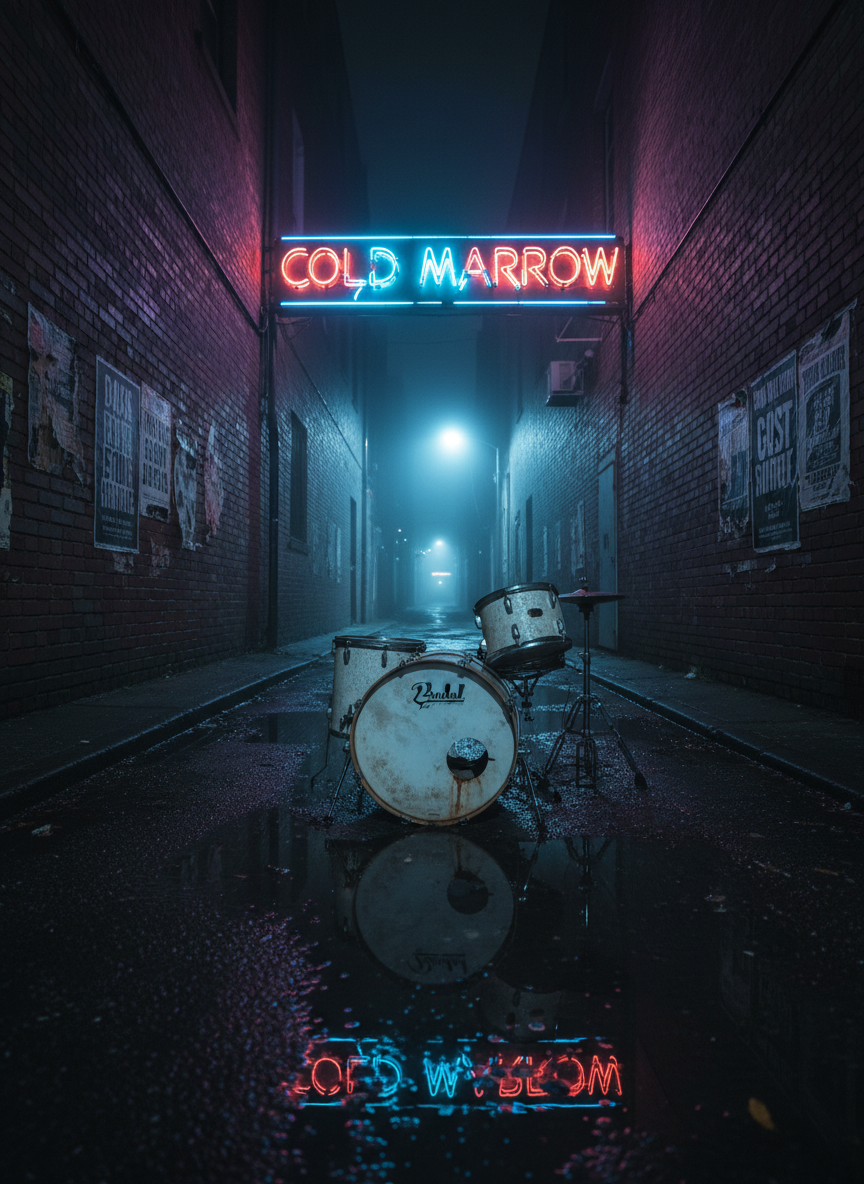
A desolate, nighttime alleyway slick with recent rain, puddles reflecting the distorted neon sign of a forgotten club reading “Cold Marrow” in fractured letters. At the center, a lone, abandoned drum kit without cymbals, its white heads stained and dented, sits crooked on the uneven asphalt. Torn gig posters cling to brick walls, peeling at the edges, their bold post-grunge typography barely legible. A distant streetlamp provides a cold, cinematic backlight, creating long, eerie shadows and a halo of mist in the chilled air. Framed from a low, wide-angle perspective, with deep focus capturing the full length of the alley, the mood is desolate yet defiant, a visual echo of songs born from damage that refused to fade.

Cold Marrow

Post‑grunge confessions carved from leftover hurt, for anyone still living with what never healed.

About

Where the Bruises Learned Songs

Cold Marrow began in a basement after everything fell apart. Raised on post‑grunge static and late-night confessions, we write from the damage that stayed, chasing melodies that make regret feel louder, lighter, and finally shareable.
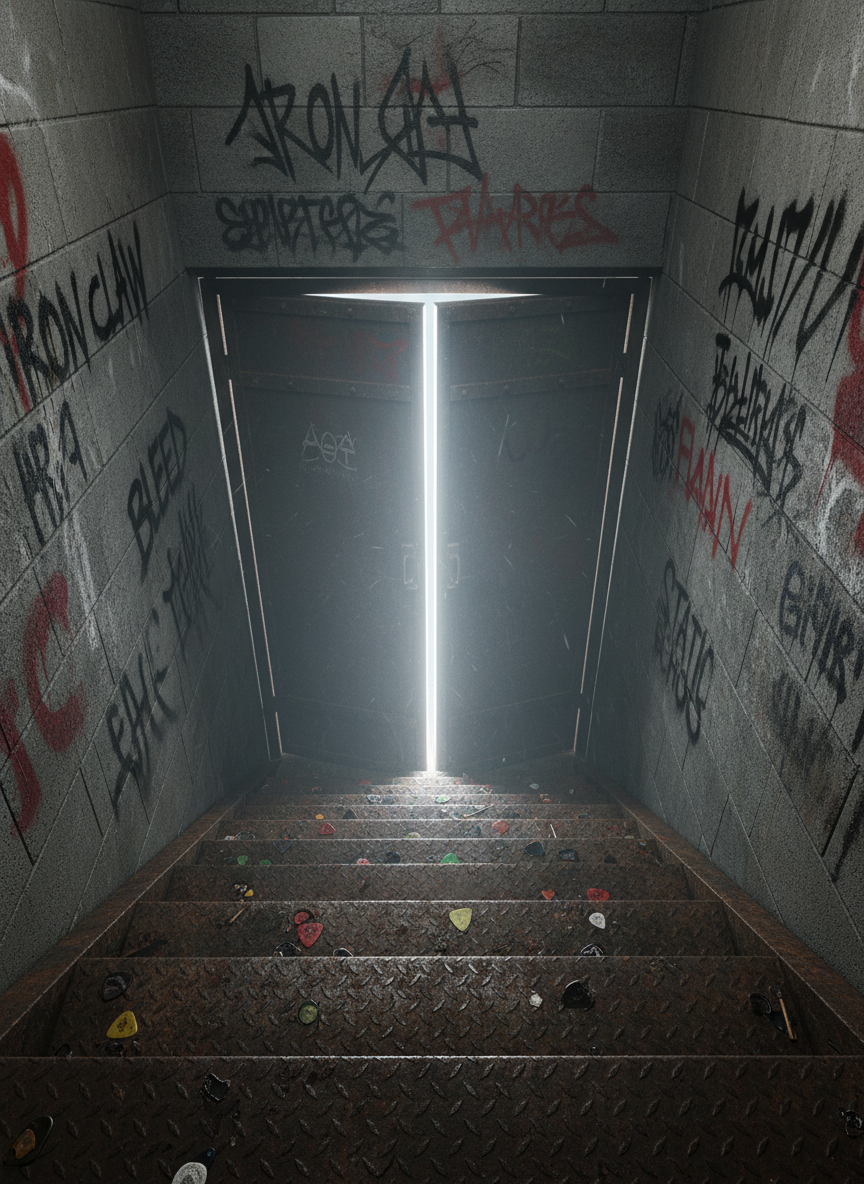
A rusted steel staircase descending into an underground rehearsal bunker, its steps worn and stained, scattered with broken guitar picks and snapped drumsticks. At the base, a heavy, soundproof door is slightly ajar, leaking a thin sliver of icy white light that cuts through the surrounding darkness like a blade. Faint, fog-like dust hangs in the air, illuminated in the beam, while the cinderblock walls are tagged with fading, aggressive band logos and jagged song titles. The shot is composed from the top of the stairs, looking downward with a wide cinematic lens, creating a vertiginous depth and strong leading lines. The atmosphere is ominous and alluring, capturing the moment before entering a dark creative space where damage is turned into sound.

Echoes

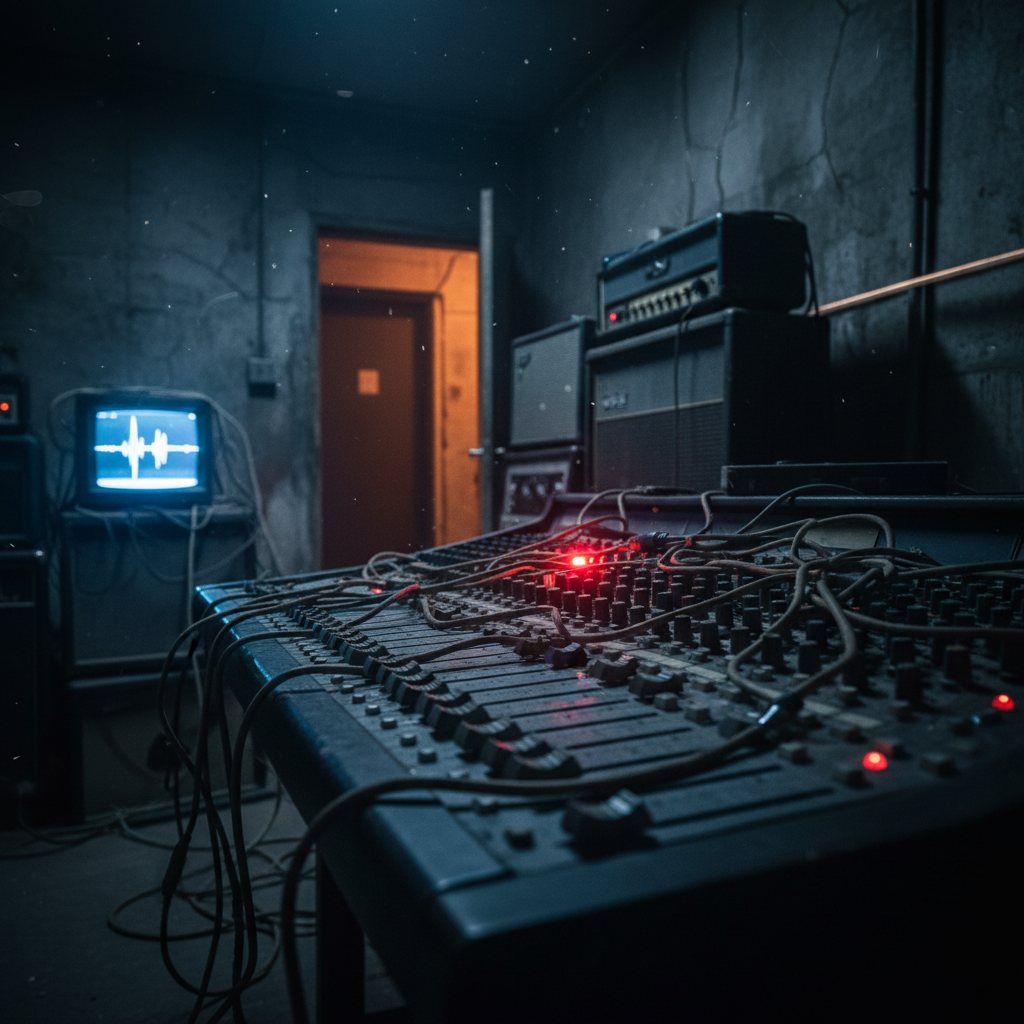
A weathered mixing console in a dim basement studio, its faders worn shiny from years of use, a single red channel light glowing like a warning in the gloom. Coiled, fraying instrument cables sprawl across the desk like veins, connecting to battered tube amps stacked against cracked, charcoal-painted walls. A small cathode-ray monitor flickers with a static waveform, bathing the scene in cold blue light, while a distant doorway leaks a thin strip of warm sodium streetlight. Captured in cinematic, high-contrast lighting from the side, with a narrow beam accentuating dust motes in the air, the composition uses rule of thirds and shallow depth of field to create a claustrophobic, haunted atmosphere of obsessive creation and lingering emotional scars.

Hope D.

Cold Marrow soundtracks the scars we hide; every chorus feels like an old wound finally breathing fresh air again.

A close-up of a shattered, blackened heart-shaped locket lying open on a scratched metal tabletop, its glass interior replaced by a fragment of cassette tape ribbon tangled with tiny metal screws. The metal surface around it is etched with faint, hand-carved lyrics and gouges, some filled with dark grime, others catching faint reflections. A narrow beam of cold, cinematic side light slices across the scene, leaving most of the background in velvety darkness, with only a faint bokeh of out-of-focus amps and speakers behind. Shot with extreme macro detail and shallow depth of field, every scratch and imperfection is brutally clear, creating a mood of intimate, post-grunge melancholy and the kind of emotional damage that never fully heals.

Hope D.

It’s the grit of 90s alt-rock with the weight of adulthood; these songs don’t flinch, they just stay.
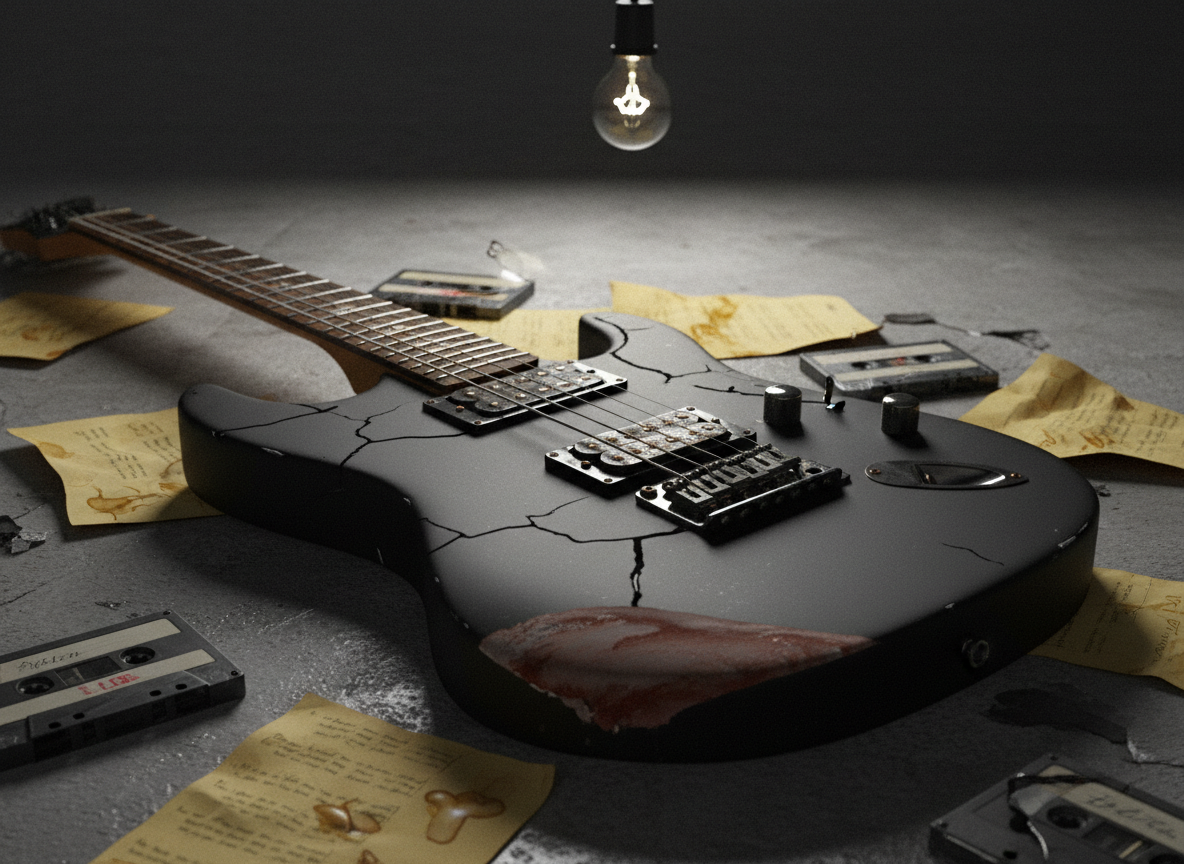
A cracked, matte-black electric guitar body lying on a cold concrete floor, its strings slightly rusted and pickups scarred, a faint smear of dried paint along the edge like an old wound. Around it, scattered cassette tapes and torn lyric pages curl at the corners, soaked with faint water stains. A single bare bulb hangs overhead, casting harsh, cinematic top light that carves deep shadows and sharp highlights into every surface. The background dissolves into soft, grainy darkness, with shallow depth of field isolating the guitar as the lone survivor. Shot at a low, three-quarter angle, the mood is heavy and introspective, embodying post-grunge damage and resilience in stark, photographic realism.

Hope D.

Raw, melodic, and uncomfortably honest—Cold Marrow turn quiet disappointments into anthems you want to scream in the dark.

A desolate, nighttime alleyway slick with recent rain, puddles reflecting the distorted neon sign of a forgotten club reading “Cold Marrow” in fractured letters. At the center, a lone, abandoned drum kit without cymbals, its white heads stained and dented, sits crooked on the uneven asphalt. Torn gig posters cling to brick walls, peeling at the edges, their bold post-grunge typography barely legible. A distant streetlamp provides a cold, cinematic backlight, creating long, eerie shadows and a halo of mist in the chilled air. Framed from a low, wide-angle perspective, with deep focus capturing the full length of the alley, the mood is desolate yet defiant, a visual echo of songs born from damage that refused to fade.

Hope D.

I came for heavy riffs and stayed for the lyrics; it feels like they’ve read every page I tried to burn.

The Wreckage

A rusted steel staircase descending into an underground rehearsal bunker, its steps worn and stained, scattered with broken guitar picks and snapped drumsticks. At the base, a heavy, soundproof door is slightly ajar, leaking a thin sliver of icy white light that cuts through the surrounding darkness like a blade. Faint, fog-like dust hangs in the air, illuminated in the beam, while the cinderblock walls are tagged with fading, aggressive band logos and jagged song titles. The shot is composed from the top of the stairs, looking downward with a wide cinematic lens, creating a vertiginous depth and strong leading lines. The atmosphere is ominous and alluring, capturing the moment before entering a dark creative space where damage is turned into sound.

Aarav Sharma

A weathered mixing console in a dim basement studio, its faders worn shiny from years of use, a single red channel light glowing like a warning in the gloom. Coiled, fraying instrument cables sprawl across the desk like veins, connecting to battered tube amps stacked against cracked, charcoal-painted walls. A small cathode-ray monitor flickers with a static waveform, bathing the scene in cold blue light, while a distant doorway leaks a thin strip of warm sodium streetlight. Captured in cinematic, high-contrast lighting from the side, with a narrow beam accentuating dust motes in the air, the composition uses rule of thirds and shallow depth of field to create a claustrophobic, haunted atmosphere of obsessive creation and lingering emotional scars.

Mateo García

A close-up of a shattered, blackened heart-shaped locket lying open on a scratched metal tabletop, its glass interior replaced by a fragment of cassette tape ribbon tangled with tiny metal screws. The metal surface around it is etched with faint, hand-carved lyrics and gouges, some filled with dark grime, others catching faint reflections. A narrow beam of cold, cinematic side light slices across the scene, leaving most of the background in velvety darkness, with only a faint bokeh of out-of-focus amps and speakers behind. Shot with extreme macro detail and shallow depth of field, every scratch and imperfection is brutally clear, creating a mood of intimate, post-grunge melancholy and the kind of emotional damage that never fully heals.

Zuri Ndlovu